The signs of ecological change are increasingly difficult to overlook. Primordial forestlands disappear, ancestral languages fall silent, microplastics find their way into living bodies and ecological systems, industrial farming alters the microbiomes upon which larger systems depend, and groundwater carries traces of industrial waste. These are among the ecological, cultural and planetary consequences now evident across the Earth we inhabit (Richardson et al., 2023).
The Anthropocene has become one way of naming this condition. The term remains contested, particularly because calling humanity a geological force can obscure enormous differences in who and what has produced ecological damage, who has benefited from it, and who continues to bear its consequences. Nevertheless, the Anthropocene draws attention to something difficult to ignore: human activity has become capable of shaping and forcing Earth systems on a planetary scale (Crutzen, 2002; Steffen et al., 2007).
However, something else is embedded in this story. It concerns not only what humans have done to the Earth, but how particular traditions have taught us to understand our relationship with it. Val Plumwood (1993) spent much of her work challenging the Western separation of human and nature and the forms of rationality that allow the more-than-human world to become something outside ourselves: a resource, an instrument, something available for human purposes.
Plumwood asks instead what might happen if rationality recognised the conditions upon which human existence depends. This is not an argument against reason or knowledge. It invites us to reconsider what we call rational knowledge, how we access it, and whether our ways of knowing adequately recognise our dependence on the lives, systems, and relations that sustain us.
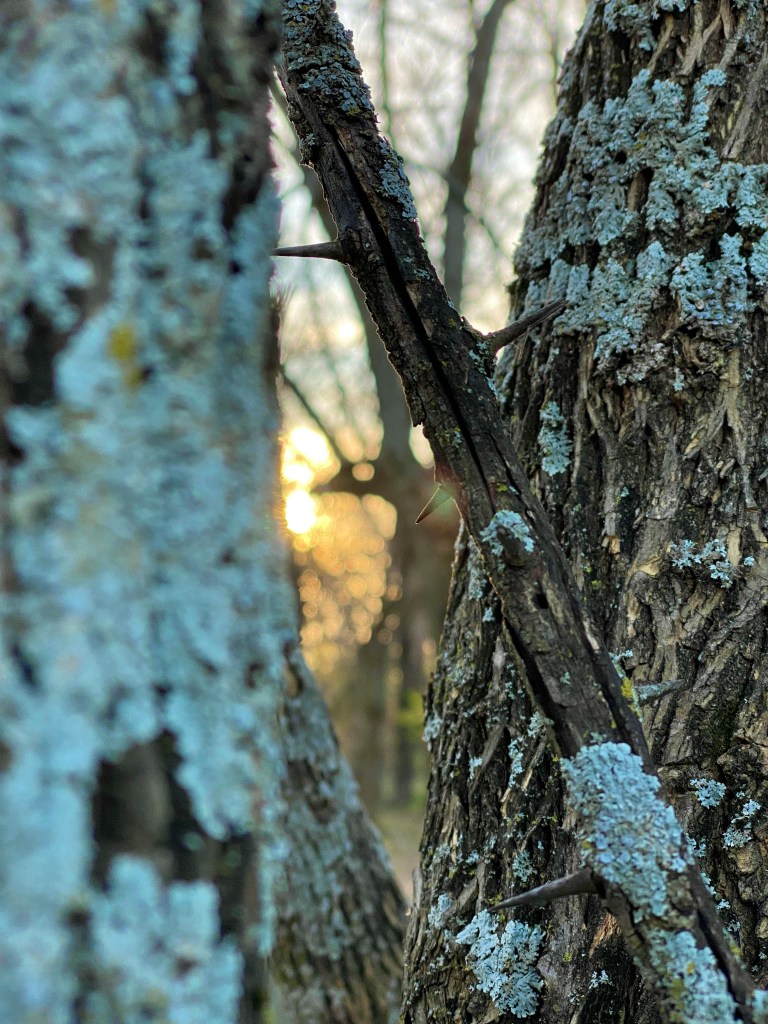
Robin Wall Kimmerer (2013) approaches this territory differently. She reminds us that when the land suffers, so too does our vision. I find this an arresting proposition for education. What if ecological crisis is not only a crisis occurring around us, but also a crisis in how we have learned to see?
Seeing, after all, is more than sight alone. We see through stories, histories, habits, assumptions and the categories through which we have learned to organise the world. We learn what deserves our attention and what can remain unnoticed. We learn what counts as knowledge. We learn, often without realising it, where humans are positioned in relation to everything else.
This makes Jenny Odell’s (2019) idea of new ‘technologies of seeing’ particularly interesting. A technology of seeing need not be another device for viewing the world. It might instead be a different practice of attention: one that interrupts familiar ways of looking long enough for other relations to become perceptible.
Perhaps this is also where the idea of re-storying becomes important. Re-storying does not require us to erase histories or pretend that ecological damage can simply be narrated away. Rather, it asks whether the stories through which we understand ourselves and the world might be told differently.
This also has an embodied dimension. Manning and Massumi (2014) invite us to consider what happens to bodies through encounters. We do not simply think our way through the world; we move within it, sense it, respond to it and are changed through contact with it. Perhaps seeing differently therefore also requires experiencing differently.
As Braidotti (2019) writes within the context of the sixth extinction, these questions are no longer particularly abstract. They concern how we might live within damaged worlds without reproducing the very relations that contributed to their damage.
For education, this presents a question rather than a ready answer. If anthropocentric ways of thinking have positioned the more-than-human world primarily in relation to human purposes, perhaps responding requires more than adding environmental content to what we already teach. It may require a repositioning of how we understand ourselves in relation to the world.
What might become visible from there?
References
Braidotti, R. (2019). Posthuman knowledge. Polity.
Crutzen, P. J. (2002). Geology of mankind. Nature, 415, 23. https://doi.org/10.1038/415023a
Kimmerer, R. W. (2013). Braiding sweetgrass: Indigenous wisdom, scientific knowledge and the teachings of plants. Milkweed Editions.
Manning, E., & Massumi, B. (2014). Thought in the act: Passages in the ecology of experience. University of Minnesota Press. https://doi.org/10.5749/minnesota/9780816679669.001.0001
Odell, J. (2019). How to do nothing: Resisting the attention economy. Melville House.
Plumwood, V. (1993). Feminism and the mastery of nature. Routledge.
Richardson, K., Steffen, W., Lucht, W., Bendtsen, J., Cornell, S. E., Donges, J. F., Drüke, M., Fetzer, I., Bala, G., von Bloh, W., Feulner, G., Fiedler, S., Gerten, D., Gleeson, T., Hofmann, M., Huiskamp, W., Kummu, M., Mohan, C., Nogués-Bravo, D., … Rockström, J. (2023). Earth beyond six of nine planetary boundaries. Science Advances, 9(37), eadh2458. https://doi.org/10.1126/sciadv.adh2458
Steffen, W., Crutzen, P. J., & McNeill, J. R. (2007). The Anthropocene: Are humans now overwhelming the great forces of nature? Ambio, 36(8), 614–621. https://doi.org/10.1579/0044-7447(2007)36[614:TAAHNO]2.0.CO;2


Leave a Reply