Henri Bergson used metaphors and imagery (he won the Nobel Prize for literature in 1927). He implies there are other ways to understand the world.
Bergson argues that intuition may be how we humans can self-consciously return to the creative impulse that underlies all of life.
Intuition is the capacity to connect from within oneself. Intuition is the coming to awareness of our enmeshment with all of existence.
Our place as a small bud in an ever-expanding tree of life.
He reminds us that life is open and continuous.
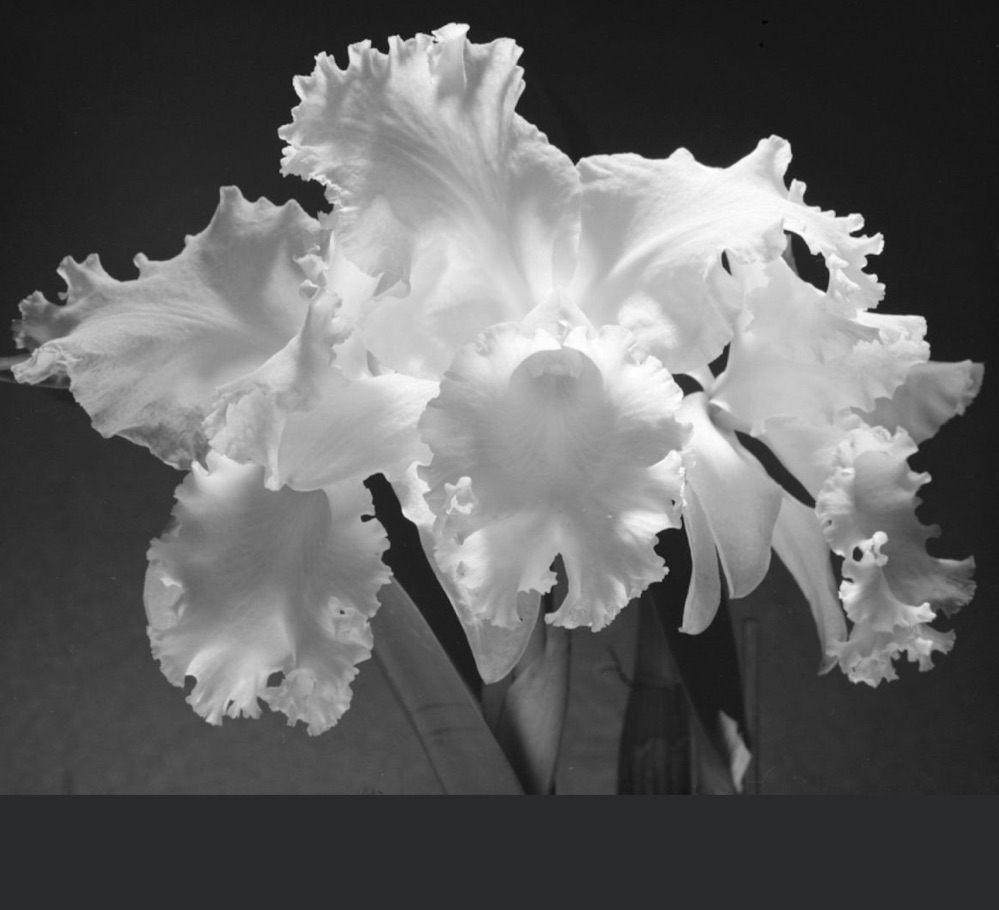
Bergson seeks to create a philosophy not modeled on the sciences, which strive for repeatability, but one aligned more closely with art and its practices. The artist, through an intuitive act, extracts from the interior of an object some of the forces and energies it contains and re-presents them in an artwork. In doing so, the artist follows life’s contours and intensities, expanding consciousness so that it becomes more fully in touch with life itself: with the forces of reciprocal interpretation and continuous creation. This internal knowledge is without parts, fundamentally indivisible, even as it flows in multiple directions. It clarifies that humans are not set apart from the world, certainly not above it, but concentrated within it and within our own inner operations.
In Creative Evolution, Bergson offers a way of understanding ourselves and the world not as mastery or possession of knowledge, but as interwoven and diverging forces. He opens us to the living and non-living forces that surround and compose us, and a new openness toward a future that cannot be contained, though it is already prepared for in this shared past.
Bergson introduced two key definitions:
Durée represents the subjective, lived experience of time, distinct from the abstract, objective time measured by clocks and calendars. It resists strict definition and even unsettles the mechanics of language itself. Where scientific or mathematical models freeze moments in order to measure them, durée emphasizes temporality as flux, movement, and continuity—qualities that cannot be adequately captured by static categories.
Élan vital, a concept coined by Henri Bergson, means “vital impetus” or “life force.” It names the mysterious, generative energy that drives life, evolution, consciousness, and growth. More than a biological mechanism, it is a creative and dynamic force, an inner impetus propelling organisms toward transformation, development, and change.
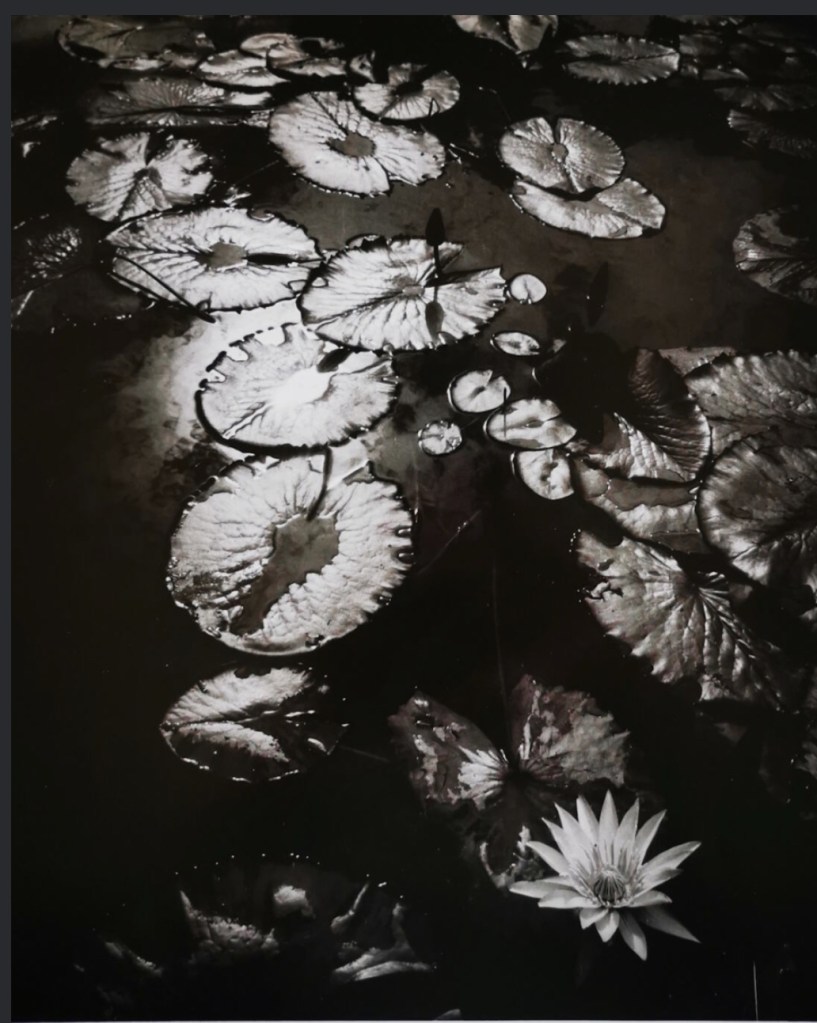
Bergson goes over duration and memory to get to evolution. He presents the idea that “when I look inside myself – what I find is continuous change from one state to the next – but even that can be broken up – it is never this clear cut”.
Bergson presents the idea of the cinematographic image: We can only live knowledge, otherwise it is reducible to still photographs.
“I cannot have direct knowledge of this whole, yet I live it through my body, through inherited languages, concepts, knowledges, and practices. Through intuition, I can glimpse the places in which I participate in the great wave of life that shares my duration with all those who precede and follow me”.

Bergson turns to the example of music. A piece can be transcribed into a sequence of symbols, each standing for a chord. Yet when we listen, we do not hear a succession of isolated units. We hear movement, harmony, swelling—a whole that carries us forward. If the music were to stop before its resolution, the entire meaning of the piece would be altered.
In this sense, language belongs to the symbolism of the intellect. Words attempt to tidy up the flux, change, and chaos of lived experience, but they cannot fully contain it. At best, language—and especially metaphor—can only point us, or head us, in the right direction.

Bergson placed action at the centre of understanding: we come to know the world by acting upon it. For him, life is phenomenological, shaped by personal experience, and true freedom lies in creativity—the act of bringing forth something genuinely new.
When were you last creative—today, yesterday, a week ago?
The Bergson text, Creative Evolution (1907) was written in the period of the Belle Epoque: peace, economic prosperity, technological innovation, and cultural flourish. This is reinforced if we look at the work of Klimt (1913) The Maidens. The Maiden explores themes of beauty, youth, transformation, and the unconscious, capturing a sense of slumbering desire and the awakening of senses.
In Creative Evolution, Bergson presents life not as the mastery of knowledge but as a dynamic interplay of diverging forces, each carrying traces of their shared origins. His philosophy invites humility, reminding us that humans are not set above life but immersed within its unfolding wave—open to futures shaped by the past, yet never fully determined by it.
Until next time,
Dr. Mon x
 EDUCATOR8
Leave a comment