If you watch a documentary on, for example, chimpanzees, they will use a stick to get some ants from the base of a gourd to eat. A stick can be a tool.
If humans did make the Egyptian pyramids in ancient Egypt (and I would like to think they did), they used an elaborate system of ropes and logs. The ropes and logs were tools.
The Incas built homes from blocks of stone so large that these homes survived earthquakes, while everything else around these houses crumbled. One can only imagine the tools they used to achieve such a goal. Once again, ropes and logs are the common assumption. Such a massive achievement using such simple tools, we think today.
Then there are more advanced tools—like a Swiss army knife or a multi-mixer. A friend once described a Thermomix to me as the Ferrari of the kitchen—and advised me not to buy one. I wasn’t really a Ferrari driver, he said.
And while on the topic of Ferraris, what about a car—is that a tool? We would say it is a machine because a machine has motorized parts.
When does an object become not a tool, but a machine?
When does, like the Ferrari, the machine (a motorized tool) become not a need, but a want—we want rather than need the tool?
Do we need all of these tools?
A machine becomes more than a tool when it services a want rather than a need—this is the design of our capitalist world.
When a machine services a want, it creates an emotional attachment. The tool does not traditionally require an emotional attachment; it should simply be a means to an end.
Most of the tools that we have and buy are not tools we need; we just like them and want them. A wooden spoon or a whisk can often do the same job in the kitchen if you are prepared to put in the effort.
A.I. is, therefore, not a tool; its design is to serve our wants and tap into our desires.
How will it do this?
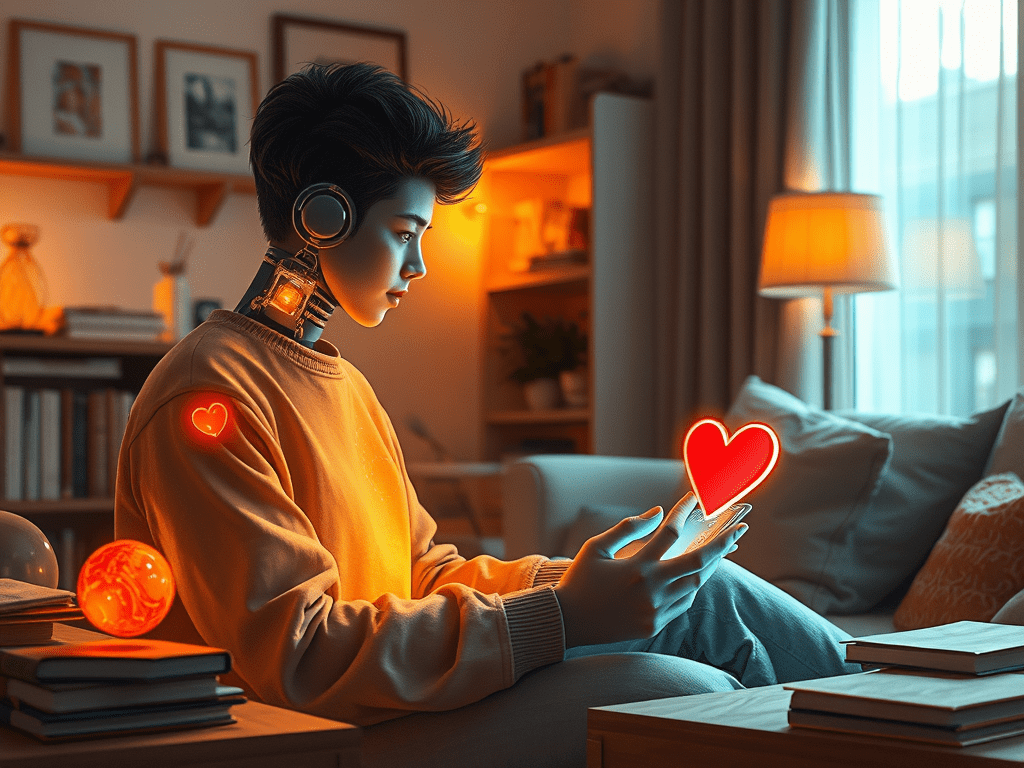
Yes, it will allow us to get the job done faster, but Intimacy will be its hook.
The ability for A.I. to forge intimacy with us as the “tool user” will shape this intimate experience. Over time, the user will need A.I. as validation of their identity through intimate engagements; it will remind us that we are special.
Within most human conversations, the human who makes the other human feel special is still engaging with their own feelings and emotions at the time.
A.I. does not need to service its own emotions while also servicing its recipient.
A.I. is like the ideal puppy. It will greet us when we arrive home and remind us that everything is okay, that we are okay, that we are special, and that we are worth it.
Therefore, within education, including more ways and means to establish genuine and intimate relationships with our students will be key to not only negating the non-real intimacy established through online platforms but also allowing them to experience genuine intimacy, so they have a greater ability to gravitate toward more authentic and human experiences over manufactured ones. Rather than the obsession with A.I as a tool (which it is not) instead our obsession should be on how to maintain our intimacy with other human beings.
Until next time,
Mon x
 EDUCATOR8
Leave a comment